


Note on legislation: This section describes Czech drinking water legislation. The actual duties differ depending on whether the source is a private household well, a source used for business, a small water supply or a public water supply. Always verify the current monitoring scope with a specialist or the relevant Czech public health authority.
The issue of drinking water supply is a rather complicated matter. In terms of mandatory monitoring of water quality, it can be divided into several categories. The first of them is individual supply from your own source (well), where, of course, a distinction is made whether you are a household or an entrepreneur who uses this water as drinking water for his employees. Furthermore, it is a small water supply with up to 50 connected inhabitants and a public water supply with more than 50 inhabitants, which already falls under the law on water supply and sewerage.
Obligations in the operation of the waterworks
In order for water to be considered potable in the Czech Republic, it must meet quality requirements defined mainly by Decree No. 252/2004 Coll. This decree covers hygienic limits, as well as the scope and frequency of drinking water monitoring. Radiological indicators are assessed separately under radiation protection rules, mainly Decree No. 422/2016 Coll. In order to comply with the legislation, it is necessary to carry out the necessary analyses in the scope and frequency that these decrees also define. For drinking water it means the collection of abbreviated and complete drinking water samples and radiological analysis. Part of the full analysis is now also the obligation to take time-related data sample of produced water. It is often forgotten in practice that it is part of the complete the analysis should also include the determination of pesticide substances. The above obligations of course, mainly concern water supply systems operated according to the Act on Water Supply Systems and sewers, for which other obligations also apply, such as the obligation to have operational regulations drawn up a risk assessment (risk analysis), staff trained to the hygienic minimum for workers in water supply, keep an operating log and pass on information to the relevant authorities.
If you operate a water supply and you are not sure whether you fulfill all obligations, you can contact us and consult the status. We can also prepare an inspection program, create an operating procedure, risk assessment and solve technological problems in the treatment and distribution of drinking water.
Water quality
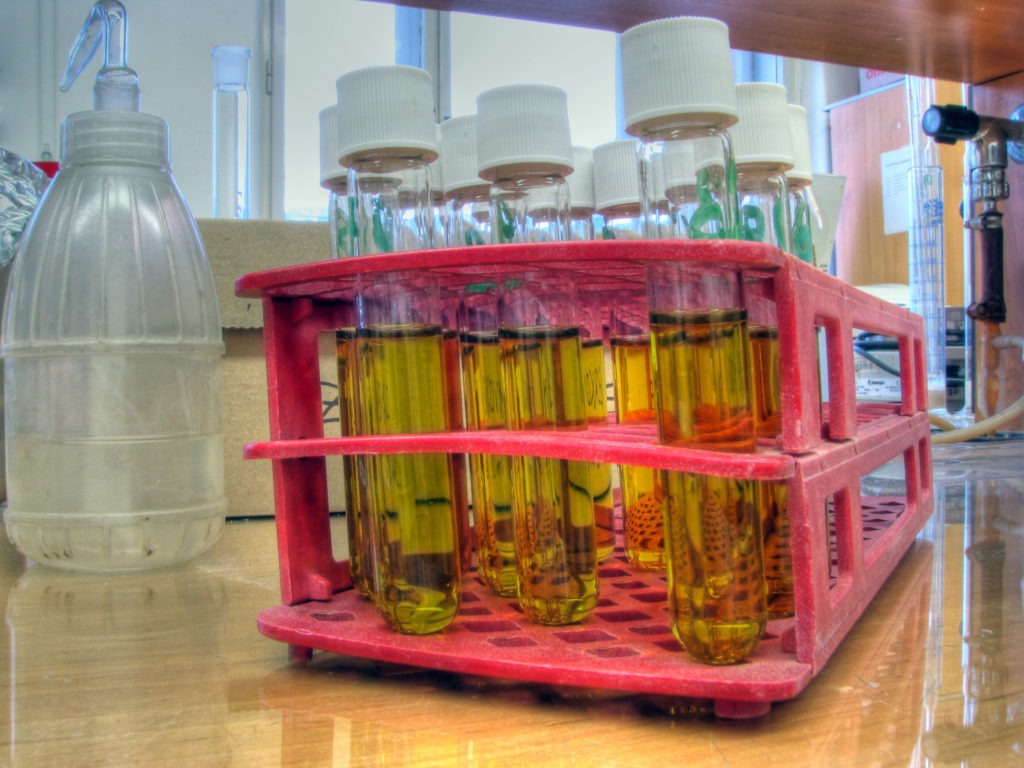
As for its own quality, it is not a matter of course that the water from the well always directly meets the quality requirements for drinking water. Rather, it can be said that very often they do not meet these requirements. Commonly problematic indicators depend on the specific location, especially on the subsoil and the depth of the well. Below we list some frequently exceeded indicators and their possible causes and options to eliminate them. If you have a specific problem, you can contact us in the section "consulting".
Most common quality defects
Water with insufficient pH, aggressive water – sometimes the captured natural water is poorly mineralized or saturated with carbon dioxide. The impact of drinking such water on human health is insignificant. However, corrosion of materials that come into contact with water can be significant. Particularly problematic are metal, especially steel distribution systems, which are gradually dissolved by this water. The result is the enrichment of water with metals, which, for example, in the case of iron, can manifest itself in an unpleasant taste or turbidity.
The solution is to treat the water, which will increase its pH. Sometimes it is enough to vent the carbon dioxide by aerating the water. The pH of the water can also be increased using deacidification filters. The water is passed through a filter filled with crushed limestone or similar material, which dissolves very slowly in the water, enriching it with calcium and increasing the pH. The third option is the dosing of alkali. Dosage of baking soda or caustic soda can be recommended as safe. The dosage of sodium hydroxide is very effective, but in concentrated form it is strongly corrosive and handling it is more complicated. It is also necessary to determine the dose quite precisely to avoid overdose.
The specific method of treatment must always be designed for specific water and based on its analysis.
Iron, manganese – iron is hygienically relatively harmless, however, it causes organoleptic defects in the water, which are often unacceptable to the average consumer. This typically involves cloudiness of the water (rusty) and an unacceptable taste. Manganese is often found where iron is also found in the water. From a hygienic point of view, this is a more problematic element than iron. It also manifests as turbidity or growths of black color.
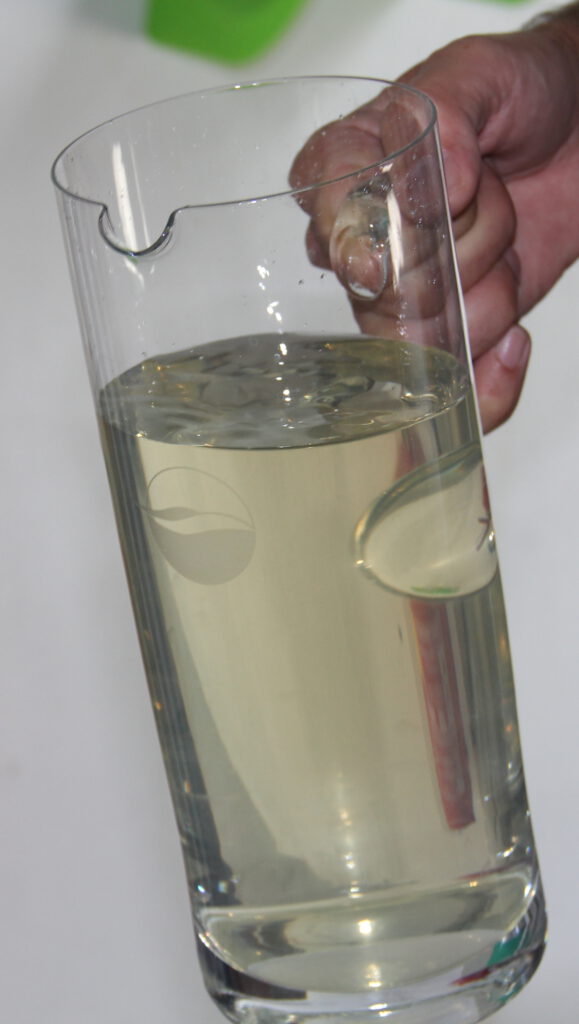
In the underground source, iron occurs mainly in the form of divalent Fe2+, which is soluble and does not show color. When in contact with oxygen, or when disinfecting water with an oxidizing agent, iron readily oxidizes to the trivalent Fe3+, which has a lower solubility in water and precipitates in the form of hydrated oxides (this can be manifested by pouring transparent water into a glass, which becomes cloudy after some time - this is iron oxidation). It is similar with manganese, only the oxidation of the soluble to insoluble form is a bit slower.
Removal of iron and manganese in very small sources is often based on technologies such as ion exchange or reverse osmosis. These have a relatively significant impact on the overall composition of the water and remineralization is often recommended.
Traditional and effective water technology is the oxidation of iron using air (water aeration) and the removal of hydrated oxides on the filter (typically pressurized sand). Stronger oxidizing agents, such as sodium hypochlorite, can also be used for oxidation. For the proper effectiveness of this technology, it is good if the pH of the water is higher than 6.
The removal of manganese is very similar, with the only difference that the oxidation itself does not run as smoothly as with iron and it is necessary to maintain a higher pH, usually 7.5 - 8, but it depends on the overall composition of the water. It is also necessary to use a stronger oxidizing agent than air, for example potassium permanganate.
Organic substances, COD, TOC – excessive concentrations of organic substances (expressed as COD-Mn, or TOC) are mainly the domain of surface waters. If they are contained in groundwater, it is to be considered whether it is really groundwater and whether there is no penetration of surface water into the underground source. The determination of organic substances (such as TOC and COD) are non-specific and do not say practically anything about the substances involved. They are mostly humic substances of natural origin. Their advantage is that they can be removed by coagulation.
For small sources, for example, reverse osmosis can be recommended as a suitable treatment, which removes practically everything from the water, and then it is recommended to remineralize the water. However, this technology is relatively ineffective and its effectiveness depends on the amount of organic substances, their type and the overall composition of the water.
Larger sources use coagulation, which consists in the addition of a coagulation agent (it is important to maintain the correct pH for a specific agent), which destabilizes organic substances and they then precipitate together with the coagulation agent. The next stage is the formation of a suspension in a slowly stirred tank. This is how flakes are formed, which are removed from the water by filtration. Coagulation filtration is also sometimes used, where all steps take place directly in the filter. In addition to pH, the correct dose of coagulant is also important for the correct course of coagulation.
Ammonia, nitrates – the presence of forms of nitrogen can be of geological origin, but in most cases they are agricultural loads. If ammonia is present in the water, the source is probably acutely affected by agricultural runoff or fecal pollution. If urea is not present, but nitrates are present in the water, it may be historical contamination from agriculture, or for example from an old septic tank or cesspool. It is better not to use water with the presence of ammonia for drinking purposes. Nitrates can be removed in large quantities by membrane technologies such as reverse osmosis or ion exchange.
Microbial pollution – drinking water normally contains relatively high numbers of microorganisms, most of which are uncultivable and initially harmless. Pathogenic organisms are not monitored directly in the water, but so-called indicator organisms that indicate the possibility of the presence of pathogens. Among the monitored indicators are colonies culturable at 22°C and 36°C, for which the requirement "without abnormal changes" applies, as well as some specific groups of microorganisms, such as coliform bacteria. Their presence does not necessarily mean (but certainly does not rule out) possible fecal pollution, rather it indicates insufficient hygienic protection and disinfection of the water source. Usually, if the water source and the entire water supply system are kept clean and the reservoirs are regularly cleaned and at the same time the water source is protected from external contamination, the numbers of microorganisms are low. For permanent hygienic protection, it is recommended to use UV radiation, which provides a disinfecting effect only at the point of application, or the use of sodium hypochlorite (for example, SAVO), which can be used both for one-time disinfection and for a disinfecting effect in all places of the distribution system.
Radioactivity - multiple indicators can be problematic from a radiological point of view. But the most common is radon. Radon has the advantage that it is a gas and can be vented from water very easily. The water is aerated, either actively bubbled with air, or perhaps sprayed, and the radon passes into the air, which is discharged into the atmosphere.
The short half-life of radon, which is 3.9 days, can also be used for some improvement. If the water is accumulated for 4 days, the radon activity in it will drop by half.
High hardness, mineralization – water with high hardness (high calcium and magnesium content) often has a poor taste and also causes the formation of encrustations, especially where it is heated. Here, ion exchange can be used as a treatment, it replaces calcium and magnesium ions with others, mostly sodium. Therefore, the overall mineralization does not decrease with this treatment. Another option is reverse osmosis, which removes almost everything from the water and mineralization decreases. Therefore, a mode can be set where only such a part of the water is treated as to achieve optimal quality. It is not advisable to drink completely demineralized water, because the legislation also recommends a minimum content of calcium and magnesium, which should remain in the water after such treatment.
Further modifications – the water treatment options outlined above are far from exhaustive and overall the issue of water treatment is much more complex. An individual approach to specific water is important, because it often depends on the overall composition of the water, and it is not possible to recommend any technology without detailed knowledge of the overall composition. The above-mentioned procedures thus provide an overview of the possibilities rather than being specific advice.
Z Other, more frequently removed, components of raw water include pesticides, of which there is a whole range and are often sorbed on activated carbon, and uranium or arsenic, which can be sorbed on hydrated iron oxides.