


Biofilm treatment plants
Two relatively common types of treatment plants can be classified into biofilm treatment plants. But one that is used more in larger installations than residential treatment plants is the biofilter. It is a sprinkler column filled with high surface area material. Previously, it used to be, for example, stone, then cut goosenecks became popular, and nowadays there are various block, sometimes also called oriented, fillings. Whatever the filling is, it should be overgrown with biomass of microorganisms and sprinkled with wastewater, and air access should also be provided for the proper functioning of microorganisms. This is usually done by sprinkling wastewater on top of the filling, which flows in a thin layer over the filling, which is simultaneously air-flowed and provides the micro-organisms with the oxygen they need. These biological filters are more suitable for smaller settlements that produce very diluted wastewater.
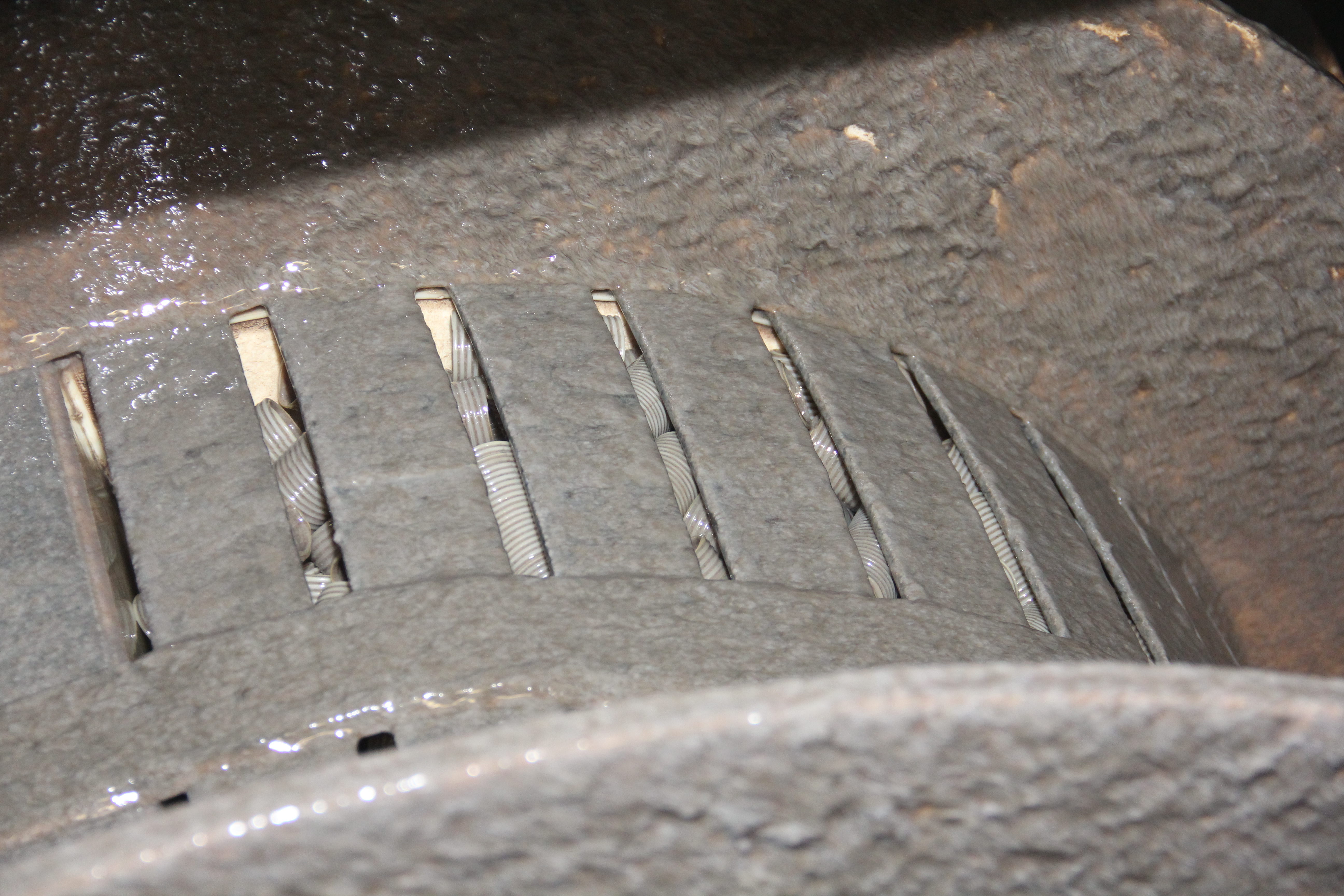
For home use, biodisc reactors appear significantly more often. The principle is essentially the same. The main difference is in the design of the entire reactor. This usually consists of a cylinder or a system of discs, or a cage with a filling with a high surface, the bottom of which is approximately 1/5 immersed in wastewater. The key is that the cylinder rotates and its surface is wetted in the wastewater. The surface of the biodisc, as with the biofilter, is covered with a layer of microorganisms that are nourished by the wastewater and, passing through the air, obtain oxygen, which allows them to oxidize the pollution in the wastewater into carbon dioxide and water (as far as the biochemistry of the cleaning itself is concerned, the process is practically the same as in the activation treatment plant).
In the steady state, the biofilm gradually dies and is replaced by a new one. That is why settling tanks are installed behind the biofilters, and biodisk reactors are often placed in such a way that the dead biofilm falls into the slot tank, where it is subsequently anaerobically degraded. Very often, the biofilm reactor is combined with an upstream anaerobic stage - usually a septic tank or a slot tank, where sedimentation and degradation of a significant proportion of suspended substances occur, as well as to reduce the load on the biological reactor itself. The latter is not suitable for highly concentrated wastewater, such as pure sewage wastewater or concentrated water from industry. Then there is an excessive growth of the biofilm, which can result in its excessive or uneven growth, rotting, the formation of dead zones and the like.
Biofilm treatment plants do not usually achieve the efficiency of activation treatment plants. Unlike most vegetation treatment plants or anaerobic treatment plants, in addition to organic substances, they can also very effectively remove nitrogen, or at least oxidize ammonia to nitrates (so-called nitrification). Phosphorus removal rates are usually low, but can be increased by installing phosphorus precipitation using iron or aluminum salts.
How to take care of specific treatment plants and how to solve the most common problems is described in separate articles: