


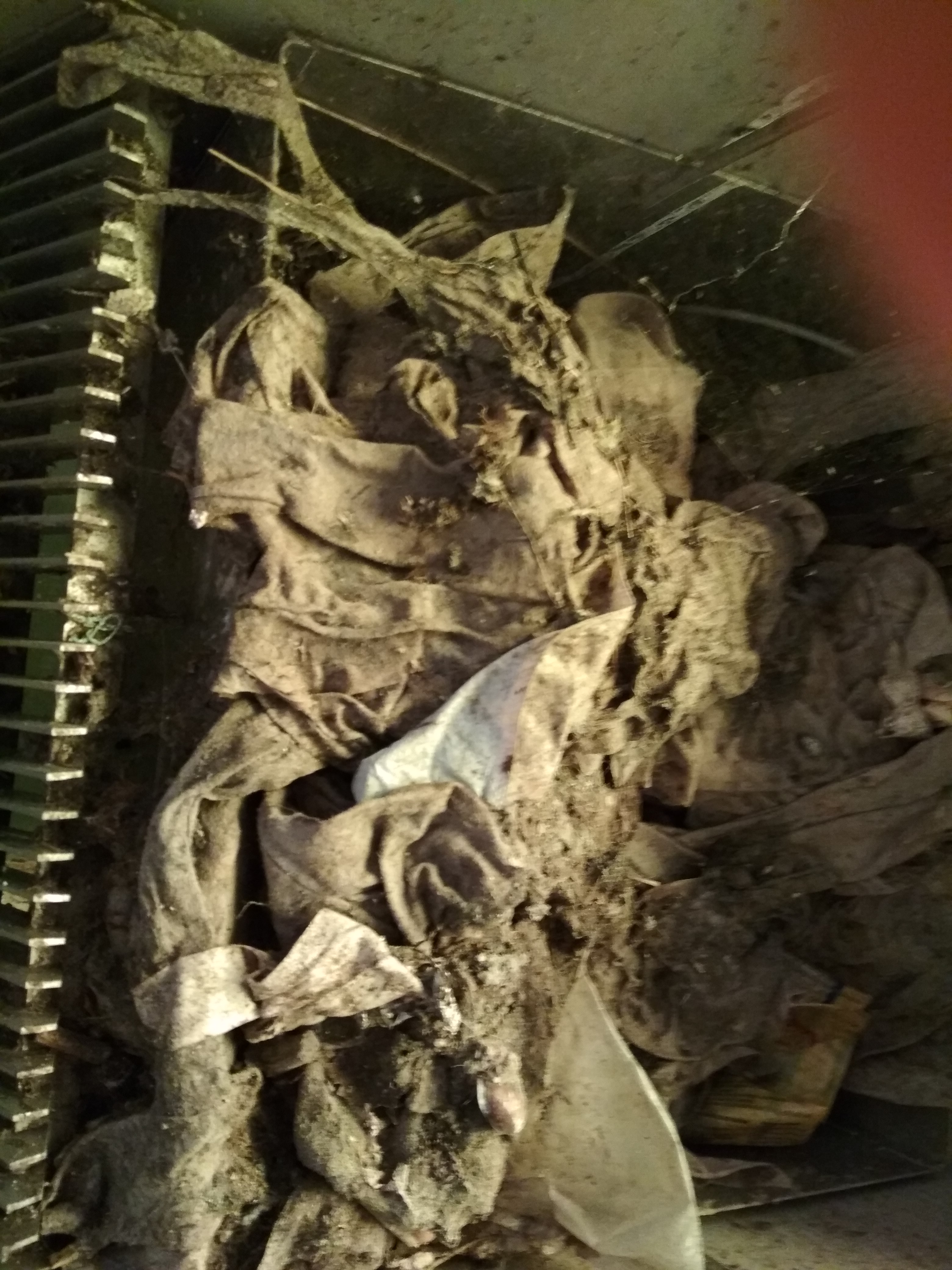
What is the most frequently asked question on the forums about house cleaning? What can and cannot be discharged into the treatment plant. I hope this article will provide exhaustive information and no one will have to ask any more questions.
First of all: the list of permitted and prohibited substances is quite different for different wastewater treatment strategies. That's good to know.
Secondly: there are a lot of materials that, if you drop them right at your treatment plant, will not collapse, nothing will be damaged, they will continue to clean, but you and the treatment plant will have a lot more work to do. In general, the more pollution you put into the treatment plant, the more you will have to take care of it. You will have to empty the septic tank more often and it will smell more. You will have to aerate the activation treatment plant more, which costs money, and it will also create more excess sludge, which you will have to dispose of somehow. The same applies to biodisc treatment plants. So if you're hesitating whether to flush something down the drain or dispose of it in a different way, dispose of it in a different way. Such a cucumber peel is nothing disgusting, but what is produced from it in the treatment plant is a nice humus, which only sufficiently hardened individuals want to handle.
Thirdly: if you are connected to a public sewage system terminated by a central wastewater treatment plant, the so-called Sewerage Regulations are binding on you, which is a summary of the dos and don'ts, including permissible concentrations. The creation of the Sewer Code is mandatory for every sewer operator and is usually freely available on the operator's website. If you own a sump, i.e. a cesspool, it is a good idea to follow the Sewerage Regulations as well. For disposal, you should then pay a fee in the amount of sewerage, i.e. on the order of tens of crowns per cubic meter. However, if you exceed the concentration, you would have to pay for the disposal of substandard water, which can easily be thousands of crowns per cubic meter.
A now we will discuss the individual types of flushable waste in order. If something is missing, write in the comments in the Counseling section or on facebook, I will add it.
1. "Waters"
Toilet, washing and laundry water
Yes, every treatment plant is there to process primarily these liquid wastes from toilets, washing and laundry. So yes, all types belong to all types of treatment plants as well as to unified or separate sewage systems.
Rainwater
Rainwater is clean and does not belong to a treatment plant. If you can, catch it in barrels and water the flowers, use it as a utility, in a pond or as you like. If you don't have a use for that much water, let it soak into the soil and drain the excess into a stream, pond or other body of water, or into a unified or storm sewer (in no case into a separate sewer).
PWhen it rains, a lot of water is created at once, and if it were to flow into the treatment plant, it would create a powerful hydraulic shock that would stir up everything that is settled. This is fatal for activated sludge treatment plants, biodiscs and septic tanks. Rainwater NO.
Condensed water
By condensed water I mean, for example, the drain from a condensing boiler, dryers or dehumidifiers. Its main defect is the zero mineral content and the resulting acidity. It is practically distilled water with a pH of around four, four and a half. Neither the activation treatment plant nor the biodiscs will like this. On the contrary, for septic tanks with cleaning and sewerage, it's quite a bummer.
If you have the possibility to drain this water with the rainwater, do it. If you do not have this option, make sure that these waters never dominate the inflow of the activation or biodisc treatment plant and occasionally check if the pH value in the treatment plant is between 6.5 or preferably 7 - 8.
2. Solid Materials
PSand, clay
PSand, clay and other inorganic materials are inert, that is, they are not subject to decomposition, at the same time they have a high density, so they settle easily. They are undesirable in the activation treatment plant, on the one hand, if they do not lie at the bottom, they wear down the treatment plant equipment, if they lie at the bottom, they have no way to get out of the treatment plant and accumulate inside. The activation treatment plant is small, so the accumulation of material that does not participate in the treatment impairs the treatment. With septic tanks and biodiscs, sand is not so much a problem, but if you release a lot of inorganic particles, you will have to remove them more often. In addition, sand lying at the bottom of the septic tank for a long time tends to form a concrete-like mass with bacteria, which is really difficult to remove. So if you can, after pulling the carrots out of the bed, first rinse the worst of them in the bucket that you use to water the bed.
Both rainwater and uniform drainage with a certain inflow of sand count.
Kitchen scraps
Bones, meat scraps, vegetable peels, and other kitchen scraps are pretty big chunks of material. The biggest problems would already be in the house pipe itself, there is a risk that they will clog it. Garbage shredders can help a bit, they grind the material to a pulp. Even so, clogging of pipes in the house is not excluded.
As for treatment plants, the situation is different again. If you have an activation with a settling tank (the first sump at the inlet. It is not aerated, by default the return sludge from the settling tank does not enter it), theoretically you could put kitchen scraps into it. However, the sediments tend to be tiny, so expect that you will have to clean them very often (depending on the frequency of cooking, but plus or minus once a week).
Kitchen waste is not included in activation without settling tank. On the one hand, there will be a significant increase in excess sludge, but not bacteria, and potato peels do not really clean the water. You will have to export and dispose of the sludge more often. Air consumption will increase, so the electricity bill will also increase. In addition, your pipes (mammoths, culverts, etc.) can become clogged, so you will have to clean and check them often. It's not worth it.
Septic tanks and biodiscs deal with shredded kitchen scraps by letting them settle. Then they will decompose very slowly. So they will be full sooner and need to be emptied. The septic tank usually has a large sludge area, so the inflow of residues will be the least troublesome of all variants. Only with him there is a risk that it will stink more.
Residues do not belong in public sewers, you would certainly violate the sewerage regulations, specifically at least in the parameters of suspended matter, COD, BSK5.
Residues of plant type belong to the compost, animal type to the dustbin. Or to pigs, dogs and other domestic creatures.
Hair
Another popular discussion topic. Hair is a little problematic, it tends to form thick, tight and long tangles and get tangled on everything. Especially the long ones. This bothers most of all with thin pipes, i.e. in house distribution systems, and with types of treatment plants with activations and biodiscs. Attention also, if you are pumping wastewater, the pumps do not need hair.
On the other hand, the septic tank is completely immune.
Toilet paper
Toilet paper breaks down into fibers after soaking in water. If you use a normal amount of it, then any type of treatment plant or public sewer does not mind.
Menstrual pads and tampons, condoms, wet wipes, ear plugs
No, no, no, no way, not in the trash. Throw them in the bin. They clog everything. Everything.
Note on (continuous) end
U in doubt, what can and cannot be done at the activation cleaner, take a test. Pour water into the bucket, add flushable non-toxic waste and wait 24 hours, stirring occasionally. If the waste has dissolved, you can flush it away. If not, it does not belong in the treatment plants.
3. Liquid and soluble materials
Washing and cleaning products
Most internet discussions give the impression that house cleaners are dependent on only environmentally friendly cleaning products, ideally baking soda, vinegar and greasy soap. That's bullshit. treatment plants are designed to decompose detergents, detergents to be degradable. You can use any means that suits you, of course including ecological ones. Just don't use agents with disinfectant effects (see Disinfectants section) and use "chemistry" wisely. For example, activation could make you foam if you overdose on the cleaner (you blow air into it) and you would also impair the availability of oxygen to the bacteria.
Fats and oils
Everyone will tell you that fats and oils don't belong in the drain. It does not dissolve in water. Plus it creates a mass, it looks a bit like styrofoam balls that stick to everything and clog the routes. It is difficult to get out even from a free surface, let alone from a narrow pipe (hot water helps 😉 ). On the other hand, it is not necessary to hysterically eliminate fats and dry the pan from the steaks with paper towels. It is enough to pour the excess fat into a PET or glass bottle after it has cooled, or remove the remains with a rubber spatula.
You can either throw away the collected fat in the sorted waste, if you have an oil container, or in the collection yard, or in the worst case, in the normal trash. Even that is better than fat in water.
Disinfectants
Disinfection kills microorganisms. So if you want bacteria to clean your wastewater, it is not advisable to kill them with disinfection at the same time.
This is nice, but sometimes something needs to be thoroughly cleaned and disinfected even in houses with a dry cleaning service. Try to use it as little as possible, get a sprayer, spray directly on the area to be cleaned or on a cloth and not in water. Ditch the toilet blocks and curtains and get a brush. For routine cleaning, do not use detergents that also destroy bacteria/viruses/germs.
The choice of active substance is also important. Organic acids (vinegar and the like) are definitely the friendliest for treatment plants. Means based on sodium hypochlorite (Savo) are also relatively good - it is highly reactive, it reacts with the first suitable molecule and thus decomposes. Yes, some products can be, let's say, not completely harmless, but it is absolutely nothing compared to the original substance. If you have to, and you have a bucket full of absorbent water, pour a shovelful of clay or compost into it, mix it, let it stand for a while, and then pour it into the grass. "Chlorine-free" disinfectants are the worst option for a treatment plant. These usually contain quaternary ammonium salts or other disinfectants, but they are chemically less reactive and work until some super-resistant bacteria is found to break them down.
Acids and Bases
Acids and bases cause a change in the pH value of the system. If this change is large, no sewage disposal method will be satisfied.
The worst consequences will be the addition of acid or alkali to the activation and biodisc treatment plant. Bacteria like stability, any sudden change will cause them a shock, against which they usually defend themselves by disintegrating the sludge and flowing away from you. The optimal pH value in the treatment plant is 7-8.
Even a septic tank or sewage system does not tolerate pH changes. On the one hand, a large number of bacteria live in a septic tank, which are very conservative in terms of pH. In addition, there will also be a violation of chemical balances, which can lead to the release of toxic gases. Do you know cwhat happened in 1996 in Olomouc?
I don't expect anyone to routinely handle strong and concentrated acids at home. However, be careful if you sometimes tend to poke through lye-clogged waste. The treatment plants will not like that, lye is a strong base and even a small amount will cause a big change in pH.
In general, if you need to drain something that is very acidic or very basic, you first need to dilute it a lot with water and then neutralize it (ie acid with base and vice versa). Then check if the pH is fine (I recommend aquarium drops or strips for measuring pH in the aquarium or pool, or electronic pH probes) and then you can drain it.
Medicines, paints, solvents, petroleum substances
Yuck! Remnants of medicines belong to the pharmacy, others to the collection yard (hazardous waste).